
Becoming a mother is one of the most powerful and happy transitions in a woman’s life. But while the focus naturally shifts to the newborn, the mother’s body is going through one of the biggest healing phases she will ever experience. This is why postpartum nutrition plays a critical role in emotional well-being, hormonal balance, lactation, and long-term growth.
Many new mothers feel exhausted, overwhelmed, or physically drained in the first few months. This phase of Postpartum Recovery requires rest, emotional support, and the right foods to heal faster. Your diet after childbirth leaves a deep influence on how quickly your body repairs tissues, restores nutrient levels, rebalances hormones, and builds strength.
In this blog, we’ll explore how the right foods and the right support can help you heal faster after delivery. Along with that, you’ll get the nutrition guidance to ensure your gentle and complete recovery.
Why Postpartum Nutrition Matters?
During pregnancy, the body uses a huge amount of nutrients to support the baby’s growth. Right after childbirth, mothers often experience:
- Low iron levels
- Weakness or fatigue
- Hormonal fluctuations
- Mood swings
- Sleep disturbances
- Depleted nutrient stores
- Slower wound recovery (C-section or vaginal tears)
A healthy diet after pregnancy becomes the foundation that allows your body to repair tissues, rebuild strength, and support breastfeeding. Postpartum nutrition is about choosing the right foods to support healing, immunity, and emotional balance.
Common Challenges Mothers Face After Delivery
Understanding the body’s needs helps mothers make mindful food choices. Some of the most common postpartum challenges include:
- Postpartum Fatigue: Lack of sleep combined with low iron or vitamin deficiencies can make daily tasks feel harder.
- Mood Shifts & Postpartum Depression: Hormonal fluctuations, nutrient imbalances, and emotional stress contribute to low mood or sadness. Women prefer postpartum depression treatment through homeopathy to cure naturally.
- Low Milk Supply: Nutrition leaves a huge impact on milk production and quality.
- Slower Healing: Whether you had a C-section or normal delivery, wound healing needs nutrients like protein, iron, zinc, and healthy fats. That’s why a balanced diet after delivery for mothers is essential.
The Best Diet After Delivery for Mother’s Health
Let’s explore the foods and nutrients that support deep and long-lasting healing.
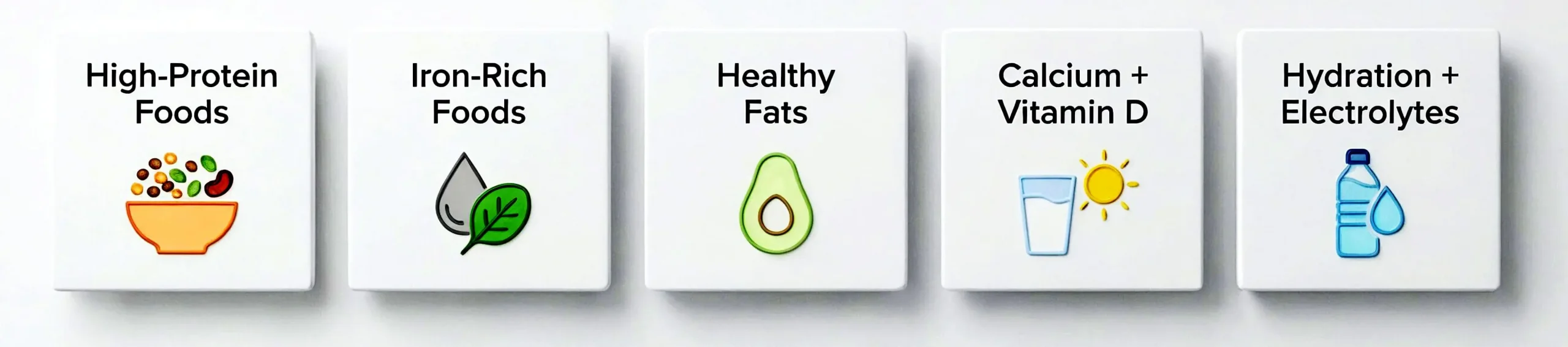
1. High-Protein Foods for Tissue Repair
Protein is essential for rebuilding cells, repairing tissues, and supporting milk production. The foods you need to include in your postpartum nutrition diet are:
- Eggs
- Paneer
- Chicken or fish
- Lentils, dal, chickpeas
- Curd and yogurt
- Almonds, peanuts, seeds
Protein is also helpful in stabilizing blood sugar, which helps in reducing irritability and fatigue.
2. Iron-Rich Foods to Combat Fatigue
New mothers often experience iron deficiency due to blood loss during childbirth. These foods include:
- Spinach
- Beetroot
- Ragi
- Dates
- Raisins
- Lean meat
- Legumes
Pair iron-rich foods with Vitamin C sources like lemon or oranges for better absorption.
3. Healthy Fats for Hormonal Balance
Healthy fats are necessary for hormone production and brain health, especially important for preventing emotional crashes. Here are some healthy fats you should include in your diet to get postpartum nutrition:
- Ghee Calcium + Vitamin D for Bone Strength
- Coconut
- Avocado
- Nuts
- Seeds (flax, chia, pumpkin)
These fats are vital foods for postpartum recovery because they support mood stability and nourish the nervous system.
4. Calcium + Vitamin D for Bone Strength
Pregnancy depletes calcium stores, especially during breastfeeding. You need to eat vitamin D and calcium to increase your bone strength. This can be achieved through different foods such as:
- Milk or almond milk
- Sesame seeds
- Ragi
- Yogurt
- Egg yolks
- Sunlight exposure
Calcium deficiency often leads to body aches, back pain, and weak bones.
5. Hydration + Electrolytes for Milk Production
Breastfeeding mothers need to consume extra fluids, and this can be done by drinking:
- Coconut water
- Herbal teas
- Jeera water
- Lemon water
- Warm soups
Hydration ensures better mood, better digestion, and better milk flow.
What to Eat After Delivery: A Sample Meal Plan
You can follow this simple diet plan or consult our experienced nutritionist online to get a personalized diet for postpartum recovery.
- Morning: Warm water with soaked raisins or nuts
- Breakfast: Oats porridge with nuts OR 2 eggs + vegetables
- Snack: Fruit + seeds
- Lunch: Dal, rice/roti, veggies, paneer or chicken
- Evening: Herbal tea or coconut water
- Dinner: Khichdi, soup, or light vegetables + protein
- Before bed: Turmeric milk or chamomile tea
Before you start following this diet plan or make your own, you need to have a better understanding of postpartum depression and other conditions that happen after delivery.
How Homeopathy Supports Postpartum Recovery Along With Diet?
Homeopathy works beautifully during the postpartum period because it addresses physical, hormonal, and emotional healing together. It focuses on the root cause rather than the symptoms. Combining homeopathy with healthy foods can help you overcome symptoms like:
- Fatigue
- Low milk supply
- Mood swings
- Postpartum depression
- Anxiety
- Slow wound healing
- Hormonal imbalance
This makes it crucial to get homeopathy treatment after pregnancy because this is a reliable and safe option for women who want holistic healing. At Holypills, we help you get online homeopathy consultations for women in India. You can choose from our budget-friendly health plans to get natural care within the comfort of your home.
How Holypills Helps You Heal Faster?
Holypills is built around one mission: support women through their most important life phases with gentle, science-backed, and root-cause healing. From helping women understand hormonal imbalance to providing homeopathy treatment for pregnancy, our experts provide secure and effective care.
In addition to this, we have built an AI-powered women’s health tracker app. It helps women track their postpartum symptoms, moods, cycles, and nutrition progress easily to take complete control of their wellness journey. We ensure mothers receive consistent care physically, emotionally, and nutritionally.
Final Thoughts
Postpartum recovery is a gentle, steady journey towards strength, physically and emotionally. With the right foods, a balanced mindset, and natural healing support, your body can recover better and faster. A nourishing postpartum nutrition diet after childbirth, combined with mindful lifestyle habits, is the foundation of long-term wellbeing.
At Holypills, we provide the support of homeopathy and expert guidance to help you heal deeply and confidently. If you are a new mother looking for a personalized postpartum nutrition plan or a natural approach to healing, you can get our online homeopathy consultation for women to get a trusted guide.

FAQs
Q1. What foods help with postpartum recovery?
Nutrient-rich foods like eggs, lentils, leafy greens, nuts, seeds, fruits, whole grains, dairy, and warm soups help repair tissues, boost energy, and support milk production.
Q2. What should a new mother avoid eating postpartum?
Avoid processed foods, excess sugar, fried snacks, too much caffeine, packaged juices, and very cold foods, as they slow digestion and delay healing.
Q3. What is the best diet plan for breastfeeding mothers?
A balanced diet plan with protein (eggs, dal, paneer), whole grains, fruits, vegetables, healthy fats, and plenty of fluids helps maintain energy and support steady milk flow.
Q4. Is postpartum depression treatable with homeopathy in Delhi?
Yes. Homeopathy provides gentle and effective support for postpartum depression. Mothers in Delhi can get homeopathy treatment after pregnancy at Holypills. Our experts have years of experience in addressing the root cause and healing women.